
Recently, I attended a baby shower which brought to the forefront of my mind how easily we forget the importance of making sure students see themselves and people who do not look like them in their school’s curriculum throughout the school year. The baby shower I attended had a book theme. Guests were asked to bring books instead of typical baby shower items. One activity at the party was guessing how many book titles you could name based on either a partial picture of the book cover or a character from the book. I tied for first place with another attendee by identifying 20 out of 24 book titles correctly. The ones I have circled in the image are the ones I did not know or guessed incorrectly. What struck me was that all of the books either featured animals or white families. Yes, I read some of those classic children books to my sons, but when my twin sons had their first birthday party, I requested all attendees bring books that featured black people.

Read Across America Day is typically the next biggest activity schools promote as Black History Month comes to a close, but some educators quickly forget all the diversity they promoted and incorporated in their classroom merely days ago when this event comes around in March. On my personal education website, the number one read post of all time is “The Use of Dr. Seuss Text – Should His Racist Cartoons Stop Us from Using His Books?” Read Across America Day’s mascot was The Cat in the Hat from Dr. Seuss’ book of the same name. This event led to educators focusing on his text. Now as some educators have become more woke and started calling out the National Education Association’s Read Across America Day, they have distanced themselves from Dr. Seuss and changed their focus to “Celebrating a Nation of Diverse Readers.”
Some educators are stubborn, and they resist change. They will still make Dr. Seuss their focus. They don’t understand…or they don’t want to understand, why it is important to not only use diverse text during cultural months such as Black History Month or Hispanic History month but throughout the year. As I said in an earlier piece this month, “We aren’t only black in February, so we shouldn’t learn about our history and culture only during February.”
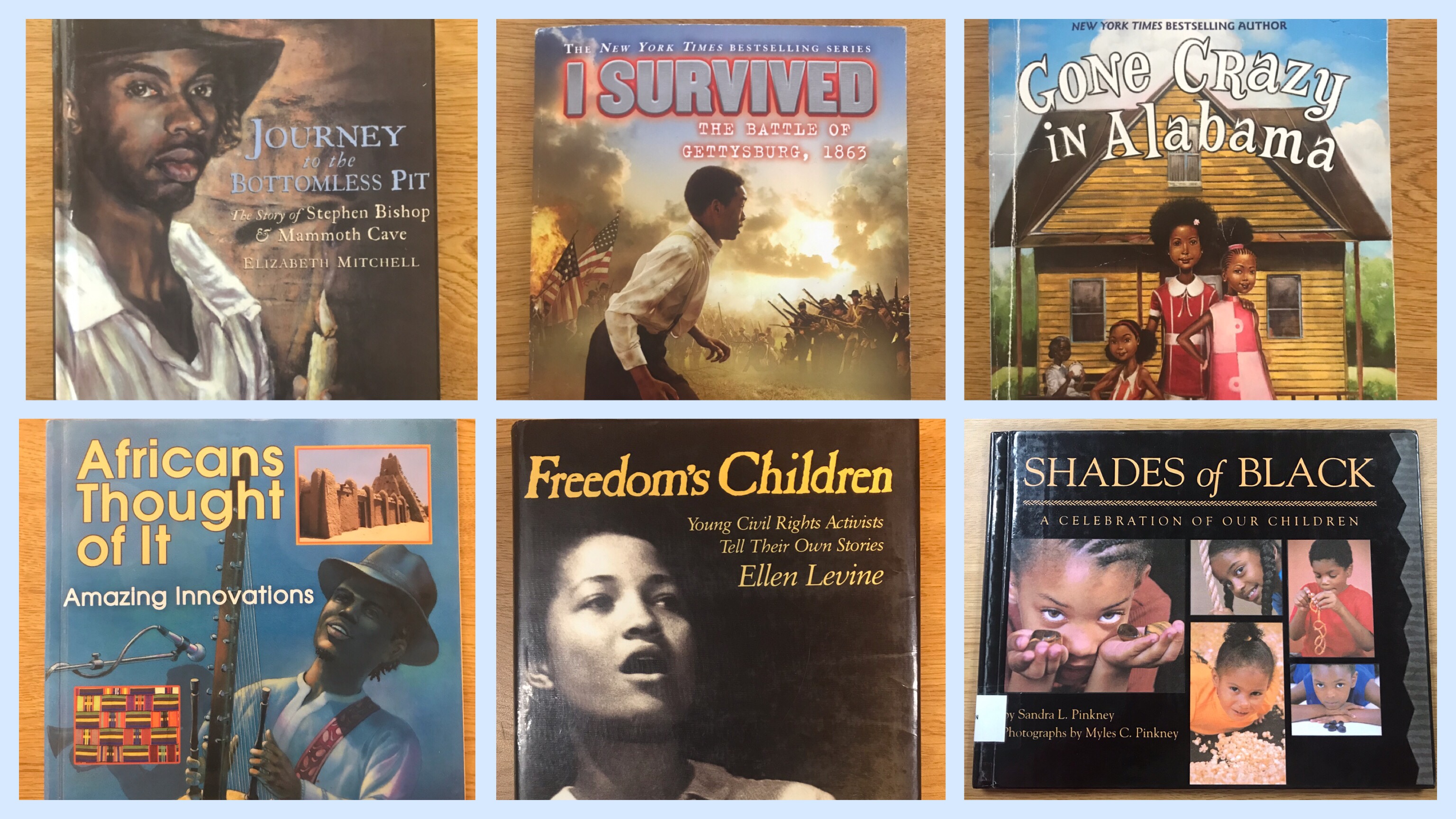
Since it is still Black History Month, I have provided a list of books that I have displayed this month in my library. As Black History Month comes to a close, educators should not forget to incorporate black history and the history of other people of color throughout their curriculum every month of the school year.
- African Myths by Gary Jeffrey
- Africans Thought of It: Amazing Innovations by Bathseba Opini and Richard B. Lee
- The Blues Singers: Ten Who Rocked the World by Julius Lester
- Booker T. Washington by Thomas Amper
- Boundless Grace by Mary Hoffman
- Brown Angels by Walter Dean Myers
- Courage Has No Color: The True Story of the Triple Nickels by Tanya Lee Stone
- Crow by Barbara Wright
- Crown: An Ode to the Fresh Cut by Derrick Barnes
- Freedom’s Children: Young Civil Rights Activists Tell Their Own Stories by Ellen Levine
- Gone Crazy in Alabama by Rita Williams-Garcia
- I Have a Dream by Dr. Martin Luther King, Jr.
- I Survived The Battle of Gettysburg, 1863 by Lauren Tarshis
- Journey to the Bottomless Pit: The Story of Stephen Bishop & Mammoth Cave by Elizabeth Michell
- March: Book 1 by John Lewis and Andrew Aydin
- Mary McLeod Bethune by Margo McLoone
- Meet Danitra Brown by Nikki Grimes
- My Name is America: The Journal of Joshua Loper, A Black Cowboy by Walter Dean Myers
- My People by Langston Hughes
- The People Could Fly: American Black Folktales by Virginia Hamilton
- Remember The Journey to School Integration by Toni Morrison
- Rosa Parks and the Montgomery Bus Boycott by Connie Colwell Miller
- Shades of Black: A Celebration of Our Children by Sandra L. Pinkney
- Uncle Jed’s Barbershop by Margaree King Mitchell
Leave a Reply